DWP Cold Weather Payments Postcodes – Check If Your Area Qualifies
 • January 8, 2026
🔴 LIVE TRIGGER UPDATE
Last Updated: January 19, 2026
Following the sub-zero temperatures brought by Storm Goretti, the DWP has expanded the trigger list. As of today, over 802 postcode areas in England, Wales, and Northern Ireland have now qualified for at least one £25 payment this winter.
Recent triggers include areas in Cumbria, Northumberland, and the West Midlands. Check the list below to see if your town is included.
As of January 19, 2026, the DWP has officially triggered Cold Weather Payments for over 802 postcode areas. Following the Arctic conditions brought by Storm Goretti, temperatures have plummeted as low as -12°C in parts of the UK, leaving thousands of households eligible for an automatic £25 payment to help with rising heating costs.
If you live in a region recently hit by sub-zero temperatures, such as Cumbria, Northumberland, or the West Midlands, you may be due a payment. Unlike other winter support, these payments are linked directly to your local weather station’s recordings.
Quick Summary: Cold Weather Support 2025-2026
What Is the Cold Weather Payment Scheme and Why Does It Exist?
The Cold Weather Payment scheme is a government initiative managed by the Department for Work and Pensions (DWP). It was introduced to assist vulnerable households across the UK with increased heating costs during particularly cold periods.
The scheme operates annually between 1 November and 31 March, aligning with the coldest months in the UK. If the average temperature in a qualifying postcode area falls to 0°C or below for seven consecutive days, a payment of £25 is automatically made to eligible claimants.
This initiative primarily supports people on certain income-related benefits who are more susceptible to the impact of extreme weather, such as older individuals, families with young children, and people with disabilities.
The rationale behind this scheme is simple but critical: extreme cold can be deadly. Heating a home during freezing temperatures is not a luxury but a necessity. This payment offers direct financial relief to cover those costs.
How Much Is the Cold Weather Payment and When Is It Paid?
When a cold weather trigger occurs, meaning seven consecutive days of sub-zero temperatures, qualifying recipients will receive a £25 payment. This payment is not limited to once per season; multiple payments are possible if more cold spells are recorded.
When Will I Receive My Cold Weather Payment?
- Payments are made automatically into the same bank account used for benefit payments.
- You’ll usually see the funds appear within 14 working days.
- Look for the reference “DWP CWP” on your bank statement.
The beauty of this scheme is its automation, there’s no need to apply. However, if you think you should have received a payment but didn’t, it’s worth contacting DWP or Jobcentre Plus to raise the issue.
Who Qualifies for Cold Weather Payments?
Eligibility is determined by both benefit status and circumstances. You must be receiving one of the following:
- Pension Credit
- Income Support
- Income-based Jobseeker’s Allowance (JSA)
- Income-related Employment and Support Allowance (ESA)
- Universal Credit
- Support for Mortgage Interest (SMI)
Additional Conditions for Eligibility
Even if you receive one of these benefits, you must also meet at least one of the following:
- Have a child under five
- Have a disability or health condition limiting work capability
- Be responsible for a disabled child
- Receive disability or pensioner premium
“As temperatures plunge, Cold Weather Payments will automatically get support directly to vulnerable households.” – Pensions Minister, Torsten Bell
It’s important to note that residents of Scotland do not receive Cold Weather Payments. Instead, they are provided with an annual Winter Heating Payment of £59.75, regardless of how cold it gets.
Has Your Postcode Been Triggered for a Cold Weather Payment?
To determine whether you qualify based on location, the DWP monitors weather conditions using data from Met Office weather stations strategically located across the UK. Each weather station is linked to specific postcode areas.
If your postcode has been linked to a weather station that recorded or forecasted seven consecutive days at or below 0°C, a payment is automatically triggered for eligible recipients in that area.
You can use the official postcode checker on the gov.uk website to confirm if your area has had a trigger. Alternatively, you can refer to updates published by trusted media outlets.
Beyond Cold Weather Payments: Other Winter Support You Can Claim
Many households that qualify for the £25 Cold Weather Payment are also entitled to additional winter support schemes, often worth significantly more overall. These schemes are run separately, have different eligibility rules, and are paid in different ways.
Some payments are made automatically, while others require you to apply directly, usually through your local council or energy supplier. Understanding the difference is important so you do not miss out on help you are entitled to.
Comparison of UK Winter Energy Support (2025–2026)
| Benefit | Amount | Eligibility Key | How It’s Paid |
|---|---|---|---|
| Cold Weather Payment | £25 per qualifying 7-day period | Certain benefits + postcode temperature trigger | Automatic |
| Winter Fuel Payment | £200–£300 | Born before 22 September 1959 | Automatic |
| Warm Home Discount | £150 (bill credit) | Low income or Pension Credit | Applied to energy bill |
| Household Support Fund | Varies (£50–£150+) | Financial hardship under council rules | Must apply |
These schemes can often be received together, depending on your circumstances.
1. Winter Fuel Payment (Automatic)
If you were born before 22 September 1959, you may receive a Winter Fuel Payment of between £200 and £300 to help with heating costs. For the 2025–2026 winter, the process has been simplified so that most eligible pensioners are paid automatically, usually between November and December.
You do not normally need to apply if you already receive the State Pension or another qualifying benefit.
Important note: If your annual income exceeds £35,000, the payment may be recovered through your tax return. This does not affect entitlement but may affect whether you ultimately keep the full amount.
2. Warm Home Discount (£150 Rebate)
The Warm Home Discount is not a cash payment. Instead, it provides a £150 credit applied directly to your electricity bill (or your gas bill if you are on a dual-fuel tariff with the same supplier).
The discount is usually applied between October and March, helping to reduce winter energy costs at the point bills are highest.
Most people in England and Wales who receive Pension Credit or meet low-income criteria are identified automatically. If you qualify, you will normally receive a letter confirming this, and the discount is applied without further action.
3. Household Support Fund (Contact Your Council)
If you do not qualify for the schemes above, or still face financial pressure despite receiving them, the Household Support Fund (HSF) provides an additional safety net. This fund is designed for people experiencing short-term financial crisis and is administered by local councils.
How to access it: You must apply through your local council’s website. Each council sets its own rules, evidence requirements, and payment limits.
What support looks like:
Help varies by area but commonly includes:
- Supermarket or food vouchers
- Energy bill top-ups
- One-off cash grants, often up to £150
Deadlines: The current funding round runs until 31 March 2026, but many councils close applications early once budgets are exhausted. Applying sooner rather than later is strongly advised.
List of DWP Cold Weather Payments Areas for 2025-2026
Following a freezing start to 2026, the Department for Work and Pensions (DWP) has confirmed that 802 postcode districts have now met the criteria for payment. Many areas in the North of England have even triggered double payments (£50) due to back-to-back freezing weeks.
Key 2026 Trigger Clusters:
- North West & Lakes: Areas linked to the Shap and Keswick stations (CA and LA postcodes).
- North East: Extensive triggers for NE and DH postcodes following record lows in Northumberland.
- Midlands & South: Recent activations for MK (Milton Keynes), NN (Northampton), and OX (Oxfordshire) via the Woburn and Benson weather stations.
UK Regions and Postcodes
| Main Region | Subregion | Postcodes |
|---|---|---|
| North of England | Cumbria & Lakes | CA9, CA10, LA8, LA9, LA10, LA21, LA22, LA23 |
| North of England | Northumberland & Tyne | NE18, NE19, NE20, NE44, NE45, NE46, NE47, NE48, NE49 |
| North of England | Durham & Teesside | DL4, DL5, DL8, DL11, DL12, DL13, DL14, DL15, DL16, DL17, TS21, TS28, TS29 |
| North of England | Yorkshire & Lancashire | BD1–BD24, OL13, OL14, BB4, BB8–BB12, BB18, HX1–HX7, HD3, HD7–HD9, LS21, LS29, S36 |
| Midlands & Central England | Derbyshire & Peak District | DE4, DE6, DE45, S32, S33, SK13, SK17, SK22, SK23 |
| Midlands & Central England | Staffordshire | ST8, ST9, ST10, ST11, ST13 |
| Midlands & Central England | Northamptonshire | NN1–NN13, NN29, NN6, NN7 |
| East of England | Cambridgeshire | CB1–CB5, CB6–CB11, CB21–CB25 |
| East of England | Essex | CM1–CM4, CM5–CM24, CM77, CO1–CO16, CO9 |
| East of England | Suffolk & Norfolk | IP1–IP33, IP10–IP31, IP32–IP33, NR1–NR35, PE12–PE38 |
| South East & Home Counties | Home Counties | AL1–AL10, EN6, HP1–HP27, LU1–LU7, SG1–SG19, WD3–WD25, SG8–SG11, SG15–SG18, HP5–HP23 |
| South East & Home Counties | Milton Keynes & Oxford | MK1–MK19, MK40–MK46, OX9, OX10, OX33, OX39, OX44, OX49 |
| South East & Home Counties | Surrey, Sussex & Kent | RH1–RH20, BN5, BN6, BN44, GU1–GU35, GU46–GU52, ME14–ME20, ME6, TN1–TN22, TN27, TN3–TN20, TN5–TN9 |
| South East & Home Counties | Berkshire & Hampshire | RG1–RG9, RG10, RG12, RG14, RG18–RG31, RG40–RG45, SO24, SL1–SL9 |
| Wales | South Wales Valleys | CF37–CF48, CF81–CF83, NP4, NP11–NP13, NP22–NP24, NP44 |
| Wales | Mid & North Wales | LD3, SY10, SY15–SY17, SY19, SY21–SY22 |
If your postcode appears in one of these regional groups and you’re on a qualifying benefit, your Cold Weather Payment of £25 per 7-day cold spell should be automatically issued by the DWP.
Note: The postcode ranges listed above (e.g. CB1–CB5, BD1–BD24) are summarised for clarity. Each range includes multiple individual postcodes, meaning the total number of affected areas exceeds 451.
How the DWP Uses Weather Stations to Track Freezing Weather?
The Department for Work and Pensions does not assess temperatures street by street or household by household. Instead, it relies on an official system operated by the Met Office. England and Wales are divided into a network of 71 designated weather stations, each responsible for monitoring conditions across a wide geographic area.
Every residential postcode is permanently linked to one specific weather station. This link determines whether an area qualifies for a Cold Weather Payment, regardless of the exact temperature outside an individual home.
A payment is triggered only when the assigned weather station records or forecasts seven consecutive days where the average daily temperature is 0°C or below. If this threshold is not met at your linked station, no payment is made, even if nearby areas experience colder conditions.
This system ensures payments are based on consistent, independently verified data, rather than local variation or short cold snaps.
Which Weather Station Covers Your Area?
To show how this postcode-to-station system works in practice for the 2025–2026 cold weather season, the table below highlights several key weather stations and the main areas they cover. These stations often serve very large populations, meaning conditions can vary significantly within a single station’s boundary.
| Weather Station | Major Areas Covered | Key Postcodes |
|---|---|---|
| Rostherne | East Cheshire & Southern Greater Manchester | WA16, SK1–12, M postcodes |
| Bainbridge | North Yorkshire & County Durham | DL8, DL11–13, BD23–24 |
| Benson | Oxfordshire & Buckinghamshire | OX9–10, OX44, SL7–9, HP5–23 |
| Bingley | West Yorkshire & East Lancashire | BD1–22, HD3, HX1–7, LS21 |
| Albemarle | Newcastle, Durham & Teesside | NE18, DH1, DL4–5, TS21 |
| Charlwood | Surrey, Sussex & Kent Borders | RH1–20, BN5–6, TN1–20 |
| Andrewsfield | Essex & Cambridgeshire | CM1–24, CB1–11, CO9 |
This explains why two nearby towns can receive different outcomes. What matters is not your local temperature, but whether your assigned weather station reaches the qualifying threshold for a full seven-day period.
Why Has Your Area Not Received a Cold Weather Payment Yet?
Not every area will qualify for a Cold Weather Payment, even during periods of widespread cold. Weather conditions can vary significantly by location, which is why eligibility is assessed at postcode level rather than nationally.
The Department for Work and Pensions (DWP) works with the Met Office to monitor temperatures using a network of local weather stations. A payment is only triggered if your area records a seven-day average temperature of 0°C or below.
Common reasons your area may not have received a payment include:
- Local temperatures staying just above the 0°C threshold
- Nearby regions qualifying while your postcode area does not
- Short cold snaps that were not long enough to trigger the scheme
If you believe your area should have qualified, you can contact the DWP or raise a query through your Universal Credit online journal. You may also find it helpful to review regional payment breakdowns from trusted expert sources for added context.
What to Do If You Haven’t Received Your Payment?
Most people will receive their Cold Weather Payment automatically. However, if you think you’re eligible and haven’t received your money:
- Wait 14 working days after the cold period
- Check your bank account for “DWP CWP”
- Contact your Pension Centre or Jobcentre Plus
- Log a message via your Universal Credit journal
If you’ve had a baby recently or a child under 5 has come to live with you, and your benefit record hasn’t been updated, you must inform the DWP to ensure payment is processed.
Cold Weather Payments in Scotland – What’s Different?
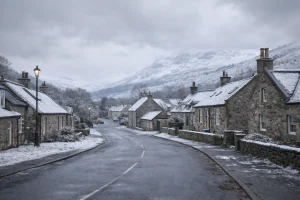
If you live in Scotland, Cold Weather Payments are not handled by the Department for Work and Pensions (DWP). Instead, the Scottish Government operates its own scheme called the Winter Heating Payment.
This system is designed to offer similar financial help during winter, but with a key difference: it is not weather-dependent. Eligible households receive a flat-rate payment of £59.75, paid once per winter, regardless of local temperatures or postcode triggers.
Eligibility is usually based on benefits such as Pension Credit or Income Support, and payments are made automatically, removing the need to track cold spells. This approach provides more predictable support, particularly for rural and mountainous areas where cold conditions can be frequent but inconsistent.
Key Differences at a Glance
Feature England & Wales (DWP) Scotland (Winter Heating Payment)
Administered by DWP Scottish Government
Weather-dependent Yes No
Payment amount £25 per cold spell £59.75 once per winter
Postcode-based Yes No
Automatic payment Yes Yes
By removing temperature thresholds, Scotland’s approach simplifies winter support and ensures vulnerable households receive help every year, without uncertainty.
Can You Receive Multiple Cold Weather Payments in One Winter?

Yes, you can receive multiple Cold Weather Payments in a single winter. Unlike one-off seasonal support, the scheme allows repeat payments whenever qualifying conditions are met.
Each time your area records seven consecutive days with an average temperature of 0°C or below, you become eligible for a £25 payment from the Department for Work and Pensions.
This means households may receive £50, £75, or more during prolonged cold periods. In recent winters, locations such as Kendal (LA9) and Hexham (NE47) triggered payments multiple times due to repeated cold snaps.
This flexibility is particularly important for older adults and families, helping offset higher energy costs during extended spells of severe winter weather.
Conclusion
This winter has been especially cold across the UK, and the Cold Weather Payment scheme plays an important role in helping vulnerable households cope with the rising cost of heating.
If your postcode has been triggered and you meet the eligibility criteria, the Department for Work and Pensions will send the payment directly into your bank account.
Even if you’ve already received a payment, more may be on the way if the cold weather continues. That’s why it’s important to check regularly if your area qualifies and make sure your benefit details are up to date.
Frequently Asked Questions
How do I know if my area qualifies for Cold Weather Payments?
Use the GOV.UK postcode checker or refer to the list above. If your area had a 7-day cold spell, it may qualify.
Do I need to apply for Cold Weather Payments?
Most payments are made automatically. You only need to report changes like having a baby or taking in a child under 5.
How quickly will I receive the payment?
Payments are issued within 14 working days after the cold weather trigger, with “DWP CWP” as the reference in your bank statement.
Can I receive multiple payments in one winter?
Yes. Each 7-day cold period results in a separate £25 payment, even within the same winter season.
What if I believe my postcode was missed?
You can contact the DWP or use your Universal Credit journal to raise an issue.
Is Scotland covered under this scheme?
No. Scotland uses the Winter Heating Payment, a fixed sum paid annually.
What are the benefits that make me eligible?
Benefits include Pension Credit, Income Support, JSA, ESA, Universal Credit, and SMI, with certain additional conditions.